PURPOSE & LIFE DESIGN
Purpose & Life Design · 9–11 min read · Updated September 2026
Some evidence of your purpose may already be sitting in the life you're living.
Do You Really Need to Find Your Purpose?
Purpose is often talked about as though it's hiding somewhere, waiting to be found. A calling. A perfect career. One defining contribution that will finally make sense of everything else. That expectation has a strange effect. Instead of bringing purpose closer, it tends to push it further away, into some future moment we haven't reached yet.
What if some of the evidence is already present in the life you're living right now?
In short
You may not need to discover your purpose so much as notice it. Ikigai (生き甲斐), a Japanese concept commonly translated as "a reason for being," offers a set of questions rather than a single answer. Satori Connect's 4Ps, Passion, Purpose, Profession and Prosperity, give a practical way to explore those questions, and CliftonStrengths® adds insight into how you naturally contribute. Together, they can help you recognise patterns that are already present, rather than waiting for one dramatic moment of discovery.
In this article
- Purpose doesn't always announce itself
- My father never needed to call it Ikigai
- My mother found it somewhere completely different
- Neither of them needed a purpose statement
- This is where Ikigai can become useful
- The 4Ps give us another way to look at what is already there
- Your strengths help you understand how you contribute
- Maybe purpose is something you practise before you can name it
- One question to carry into this week

Purpose doesn't always announce itself
It's easy to assume that purpose, when it arrives, will feel unmistakable. A single moment of clarity, a career that fits like nothing else could. But most people I've worked with have spent years doing things that genuinely matter to them without ever pausing to call it purpose. They were simply doing the work, having the conversation, showing up for the person in front of them.
My own parents never used the word. They wouldn't have known the Japanese term for it, and I doubt either of them ever sat down to write a purpose statement. And yet, looking back at how they lived, the evidence was there all along.
My father never needed to call it Ikigai
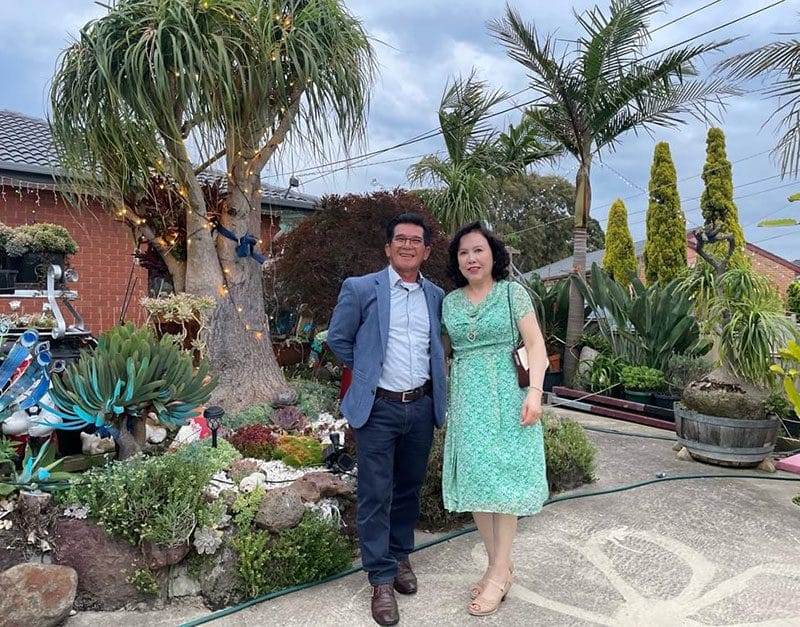
I remember my father with soil under his fingernails more often than not. Gardening was never a casual weekend hobby for him. He spent his mornings out among the plants, tending to them with a kind of patience I didn't fully appreciate as a child. He talked to them. Actually talked to them, the way you'd talk to someone you were genuinely fond of.
Over time, his skill became something other people noticed. Neighbours asked for advice. Then they asked him to help with their own gardens. What started as something he did for the quiet pleasure of it slowly became a small business, word spreading the way it does in a community where people talk to each other.
He was deliberate about it too. He chose local projects, close to home, which meant less time travelling and more time actually doing the work he cared about. That wasn't a compromise. It was a choice that let him keep doing more of what mattered to him.
My mother found it somewhere completely different
My mother's version of this looked nothing like my father's. She was a seamstress, someone who genuinely loved sewing and working with fabric. She had a gift for taking material and turning it into something people would actually wear, actually treasure.
Like my father, her skill developed through years of doing the work, and like him, other people noticed the quality of it. Her sewing grew into a small business run from home. Clients came to her with requests, some straightforward, some genuinely difficult, and her work became woven into some of the more important moments in people's lives: dresses for weddings, alterations for occasions that mattered.
Two very different people. A garden and a sewing table. Neither looked like the other, and neither needed to.
Try this today
Think of someone in your life whose work or contribution you admire, without knowing whether they'd ever call it their "purpose." What do you notice about the way they do it?
Neither of them needed a purpose statement
Here's what stays with me most. Neither of my parents needed to consciously identify what they were doing as anything in particular for their lives to reveal something true about purpose. They didn't sit down and decide on it. It became visible through what they kept returning to, what they got better at, and where other people came to rely on them.
That's worth sitting with, because it inverts the usual order. We tend to think purpose comes first, then the choices follow from it. But sometimes it works the other way. The choices come first, repeated often enough that a pattern starts to show. Purpose, in that sense, isn't always something you find. Sometimes it's something you notice, retrospectively, in what you've already been doing.
This is where Ikigai can become useful
Ikigai (生き甲斐) is a Japanese concept that combines iki (生き), meaning life, with gai (甲斐), meaning worth or value. It's commonly translated as "a reason for being." That's a broad idea, and it's worth being precise about what it is and isn't.
You've likely seen the popular four-circle diagram: what you love, what you're good at, what the world needs, what you can be paid for. It's a genuinely useful way to prompt reflection, but it's worth knowing that this exact diagram is a modern, largely Western interpretation of Ikigai, not an ancient or canonical Japanese model. The concept itself is older and broader than any one diagram can capture.
Used well, Ikigai isn't a formula that spits out an answer. It's a set of questions that can help you notice what's already present: what draws your attention, what you've become capable of, where your contribution lands, and what that contribution makes possible.
Purpose doesn't always arrive as an answer. Sometimes it becomes visible through the choices you keep making.
The 4Ps give us another way to look at what is already there
At Satori Connect, The Ikigai Method for Self-Leadership™ [INTERNAL LINK PLACEHOLDER — SATORI CONNECT 4Ps] takes those same underlying questions and reframes them as four practical lenses: Passion (what energises you), Purpose (why it matters), Profession (how your strengths create value) and Prosperity (what that value makes possible).
These aren't a formula either. Answering all four perfectly isn't the point, and you don't need every one of them to line up neatly before anything counts. They're prompts for reflection, a practical way of examining the patterns already sitting inside a life, rather than a checklist to complete before you're allowed to feel settled.
Looking back at my father through that lens: gardening was his Passion, what genuinely energised him. Watching things grow and contributing something real to the people around him was his Purpose. The skill and care he brought to the work was his Profession. And the small business it became, the ability to keep doing more of it, close to home, was his Prosperity. He never used those four words. The pattern was there regardless.
Your strengths help you understand how you contribute
Ikigai and the 4Ps help open the question of what matters and where purpose might already be present. CliftonStrengths® adds a different, complementary piece: not what matters to you, but how you naturally think, feel and contribute when you're doing it.
My father's patience with his plants, my mother's precision with fabric, those weren't just skills they'd picked up. They were expressions of how each of them naturally operated. Understanding your own natural patterns doesn't tell you what your purpose is. It helps explain how you tend to show up once you've found something that matters to you, which is a genuinely useful thing to know about yourself.
Maybe purpose is something you practise before you can name it
If purpose doesn't always arrive as a single defining answer, the more useful move might be noticing what's already repeating in your own life. What are you repeatedly drawn towards, even when nothing is forcing you to be? What do people consistently come to value from you, without you necessarily trying to earn it? Where do you lose track of time because your attention is genuinely engaged, rather than simply occupied? What have you become better at, specifically because you kept returning to it? And where does your contribution land somewhere beyond yourself, mattering to someone else?
None of those questions require a dramatic answer. They're closer to the quiet evidence my parents left behind, soil under fingernails, fabric turned into something someone would treasure, neither of them waiting for permission to call it purpose before they got on with living it.

One question to carry into this week
What is already present in my life that I might recognise differently if I stopped trying to "find" my purpose?
Key takeaways
- Purpose doesn't always arrive as a single defining answer. It can be visible in patterns you're already living.
- Ikigai is commonly translated as "a reason for being," and offers questions to explore rather than a formula to solve.
- The popular four-circle Ikigai diagram is a modern interpretation, not an ancient Japanese model.
- Satori Connect's 4Ps, Passion, Purpose, Profession and Prosperity, offer a practical lens for noticing those patterns.
- CliftonStrengths® adds insight into how you naturally contribute, which complements, rather than replaces, the question of what matters to you.
Behaviour shift
From: I need to discover my purpose before I know what direction to take.
To: I can begin by noticing the patterns already present in what energises me, what I contribute and where my strengths create value.
Your next step
For the next week, notice one activity that gives you energy, one contribution another person values, and one strength you find yourself using repeatedly. Don't interpret them yet. Just notice what keeps appearing.

Khanh Vu
Founder, Satori Connect
Gallup Certified Strengths Coach and founder of Satori Connect, with 24 years of experience in talent development, engagement and leadership coaching. Khanh created the Satori Attitude™ and the Behavioural Intelligence Engine™ that underpin every Satori Connect programme.