FOUNDER STORY
The Origin of Satori
Every learning journey has an origin. Mine began before I ever knew the word Satori. Long before I became a coach. Long before I facilitated workshops. Long before I wrote a single article.
It began with two people who believed their children could have a better life.
This is the story of where Satori came from, and why it's woven into everything we build at Satori Connect.
What does Satori mean?
Satori (悟り) is a Japanese word meaning awakening or understanding. It describes a moment of insight that changes how you see yourself and the world. Founder Khanh Vu found the word by accident in 2013, and it became the name behind Satori Connect — a strengths application platform built on CliftonStrengths, Ikigai and Kintsugi.
The courage that started it all
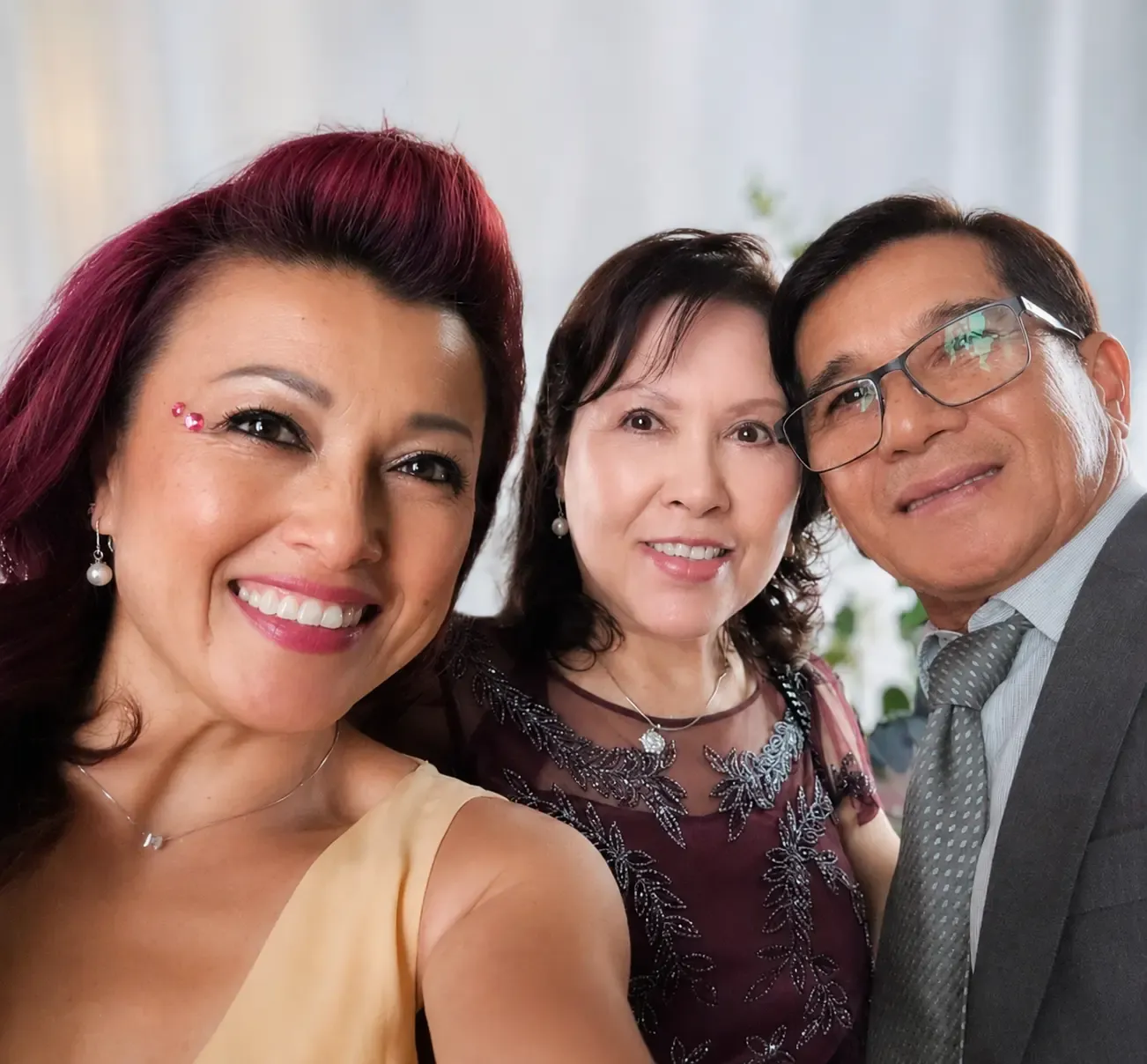
I was five years old when my family escaped Vietnam after the war. My brother was three. My youngest sister was just six months old.
My parents made the courageous decision to leave everything they knew in search of a different future. We travelled on foot for months before boarding a small boat across open waters. Neither of my parents could swim. They had no certainty about what lay ahead, only the hope that their children might have opportunities they never had.
I was too young to understand the significance of that journey. It would take many years before I truly appreciated the courage, sacrifice and love that shaped the beginning of my story.
The journey itself is one I'll tell another time. But the life my parents built afterwards became the foundation of everything I believe today.
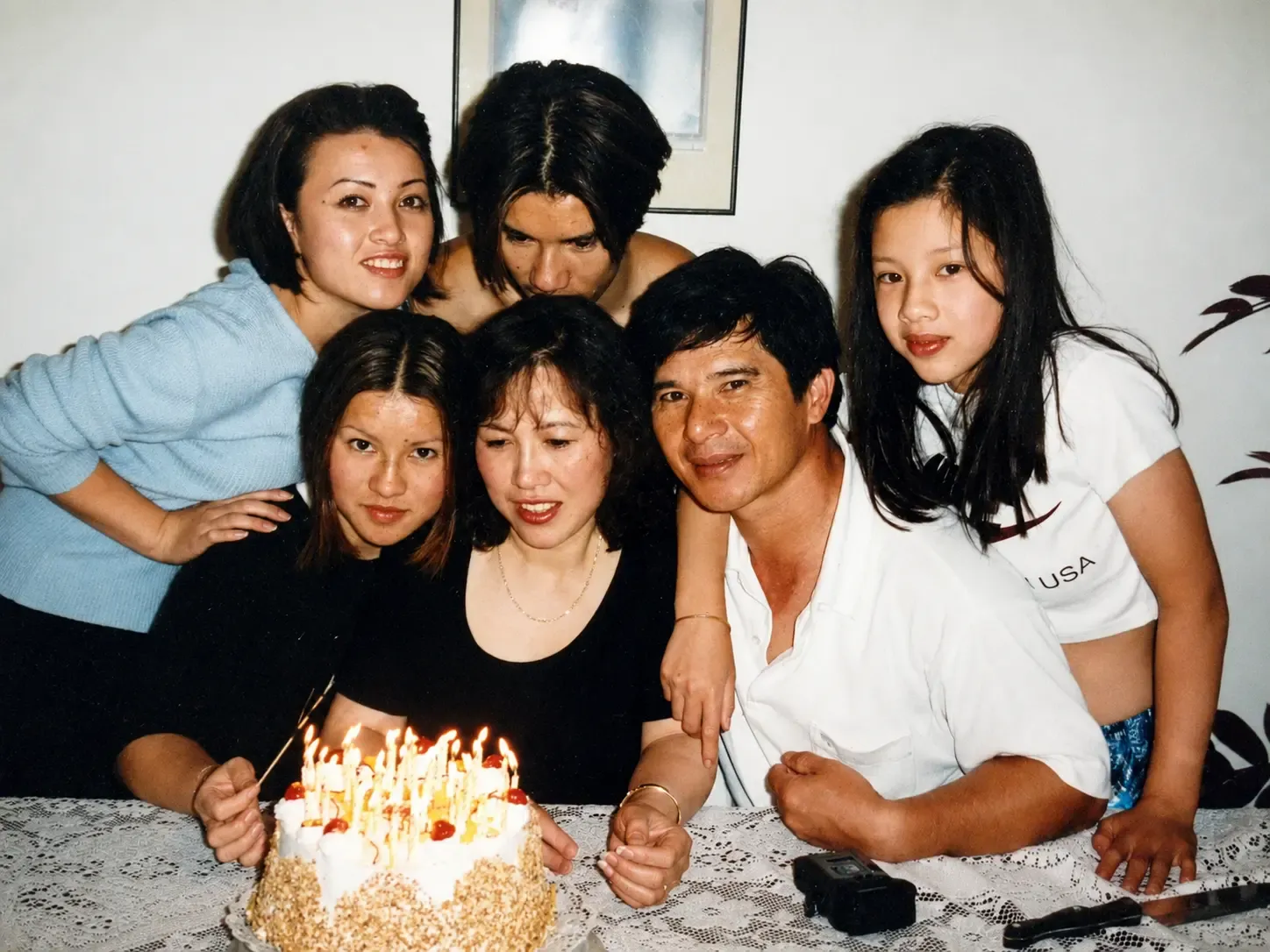
The values that shaped me
Looking back, I realise some of life's greatest lessons were taught around our family table. At the time, I didn't think there was anything unusual about it. Dinner was simply what we did.
As often as we could, everyone came home to eat together. It wasn't something we questioned. It was just part of family life. It was only years later that I recognised how sacred those moments really were.
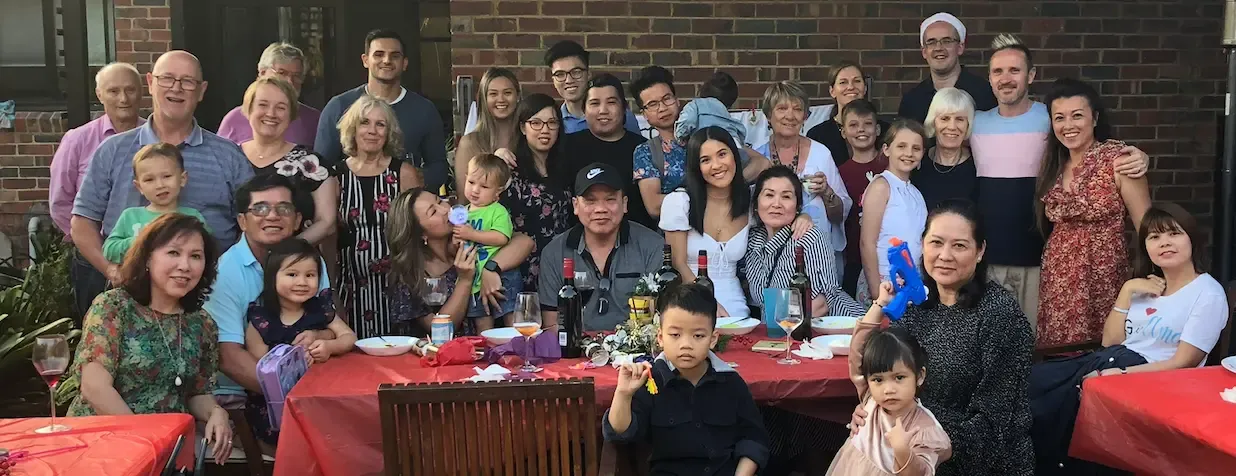
Our table was never just for the six of us. It was always growing. Aunties and uncles would drop by. Cousins filled the house. Family friends became family. There was always another chair to pull up, another plate to prepare, another story to share, a song to sing, a dance move to master.
My childhood is filled with memories of food, laughter, conversation and the warmth of people choosing to spend time together. We weren't simply sharing meals. We were building belonging.
Without ever calling them traditions, my parents were creating rituals that reminded us who we were, where we came from, and how important it was to make time for one another.
Those gatherings shaped me more than I understood at the time. They taught me that relationships deserve our presence. That hospitality is an act of generosity. That the richest conversations often happen around a shared meal. And that some of life's most meaningful moments are beautifully ordinary.
Today, our home has become that gathering place. Since Mum passed away, we've naturally become the place where family comes together. It's something I never consciously set out to create, yet it feels like the most natural continuation of what my parents began all those years ago.
When I open our home, cook a meal or gather people around the table, I realise I'm not starting a new tradition. I'm continuing one.
Finding beauty in what has been broken
My parents taught me another lesson without ever speaking its name. It would take many years before I encountered the Japanese art of Kintsugi.
The philosophy speaks of repairing broken pottery with gold, not to hide its fractures, but to honour them. The breaks become part of the object's story, making it more beautiful because of what it has been through.
When I first learned about Kintsugi, it resonated deeply. Not because it reminded me of pottery. Because it reminded me of people.
My parents never allowed the hardest chapter of our lives to become the definition of who we were. They carried the memories of leaving Vietnam with them, but they also carried hope. They chose gratitude over bitterness. Possibility over fear. They didn't pretend the past hadn't happened. Nor did they allow it to determine the future.
Looking back, I realise that's what resilience looked like in our family. They never denied what had been broken. They built something beautiful with it instead. Perhaps that's why gratitude has always felt so natural to us.
When you've experienced uncertainty, you learn not to take ordinary moments for granted. A meal shared around the table. A garden coming into bloom. Children growing up in safety. Friends who become family. The opportunity to do work you genuinely love.
These are the golden joins in our story. They don't erase the past. They honour it.
As a family, we often talk about how grateful we are for the life we've built together. Not because life has been perfect. But because we've learned that the deepest joy often comes from embracing every chapter of our story, rather than wishing parts of it had never happened.
A moment to pause
What in your own story have you been treating as broken, rather than as gold?
Finding joy in meaningful work
My parents also taught me something else, and they never needed words to do it. I learned it simply from the way they lived.
My mum was a gifted seamstress. She could transform fabric into something beautiful with patience, precision and extraordinary care.
My dad is a gardener. Not the kind who follows carefully drawn plans or perfect symmetry. He gardens by feel. By flow. By instinct. He sees possibility where others see empty space, trusting that beauty emerges when we work with nature rather than trying to control it.
I realise now that he wasn't just teaching me how to grow a garden. He was teaching me how to grow a life.
Today, I look out from my office at the orchids I've learned to nurture with my own hands. They remind me every day that some gifts aren't inherited through possessions or words. They're passed on through quiet examples.
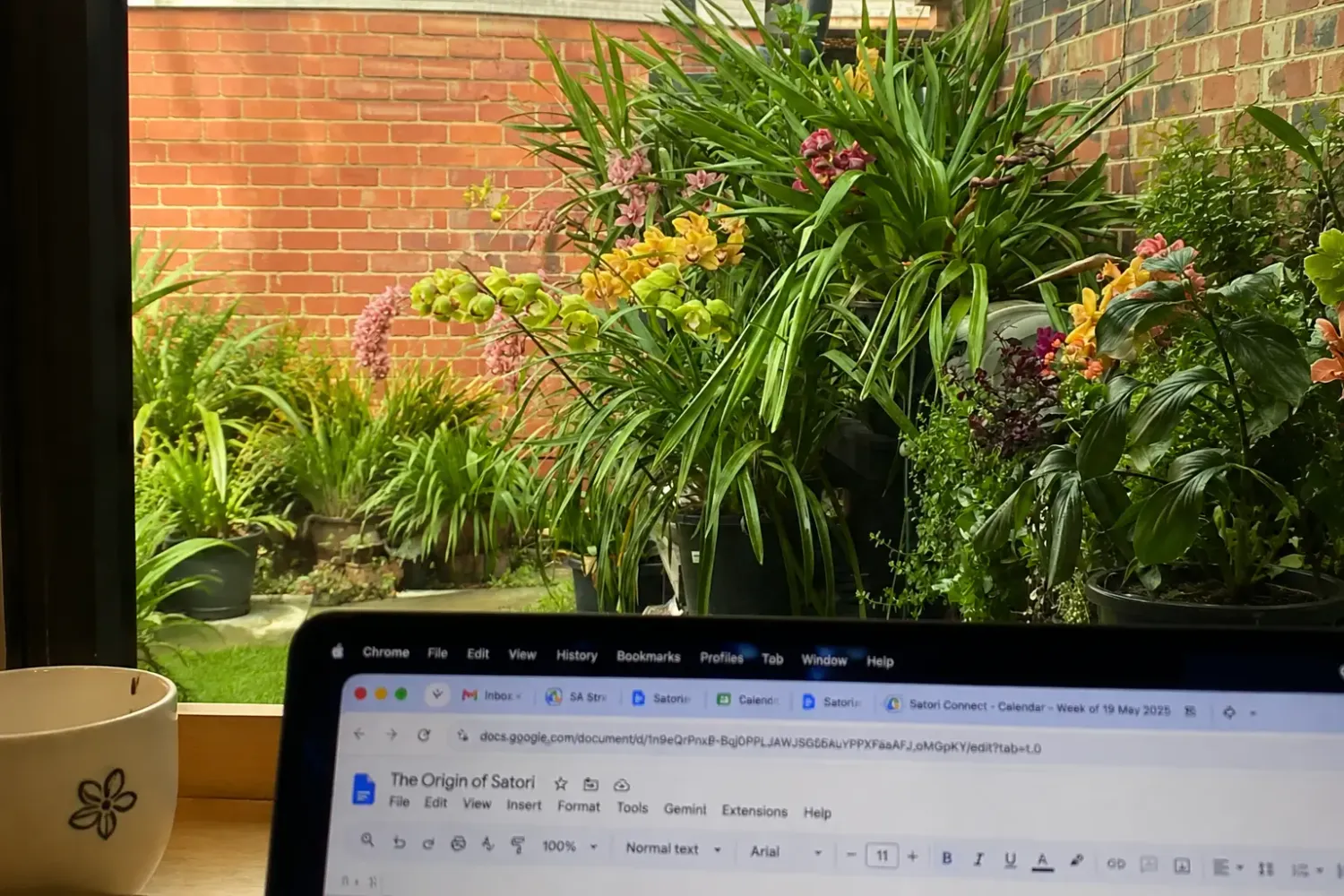
My parents loved what they did. Not because it made them wealthy or successful by someone else's definition, but because they took pride in their craft. They found joy in creating something with their hands that made the world a little better than they found it.
They taught me that excellence isn't about perfection. It's about care. They taught me that resilience isn't loud. It's quiet consistency. And they taught me that when you genuinely love what you do, work becomes more than a way to earn a living. It becomes a way of contributing.
I had already seen what meaningful work looked like long before I discovered there was a word for it. Years later, when I came across the Japanese concept of Ikigai, I smiled. There was finally a word for something I had been witnessing my entire life.
My parents had never heard the word. They didn't need to. They were already living it. And, looking back, I realise I was living it too.

Living between two worlds
As I grew older, I found myself following a path that echoed my parents' own journey.
Just as they had left Vietnam in search of new opportunities, I later left Australia to build a life in the United Kingdom. Living and working in London gave me the opportunity to collaborate with people from across Europe, broadening not only my career but also my understanding of different cultures, perspectives and ways of leading.
When I eventually returned to Australia, another unexpected opportunity emerged. I joined a Singaporean organisation, which opened the door to working with colleagues, leaders and clients from across Asia.
These experiences gave me the rare privilege of seeing the world through both Eastern and Western lenses. They also taught me something profound.
While cultures, workplaces and leadership styles may differ, our deepest hopes are remarkably similar. We all want to understand ourselves. We all want meaningful relationships. We all want to contribute in ways that matter.
Along the way, I discovered CliftonStrengths®, Kintsugi, Ikigai and behavioural science. Each offered a different lens. Each revealed something true about what it means to be human. Yet none of them, on their own, felt complete.
Over time, I realised I wasn't searching for a single answer. I was discovering how these ideas belonged together.
Wisdom isn't owned by any one culture. Some of life's greatest insights emerge when we're willing to learn from both.
Living between East and West taught me exactly that.
Apparently, I took that philosophy rather literally when I met my husband, Simon. He represents the West. I represent the East.
Together, our children are a beautiful reminder that some of the richest things in life emerge when different worlds come together. And perhaps that's why our home feels so familiar to me.
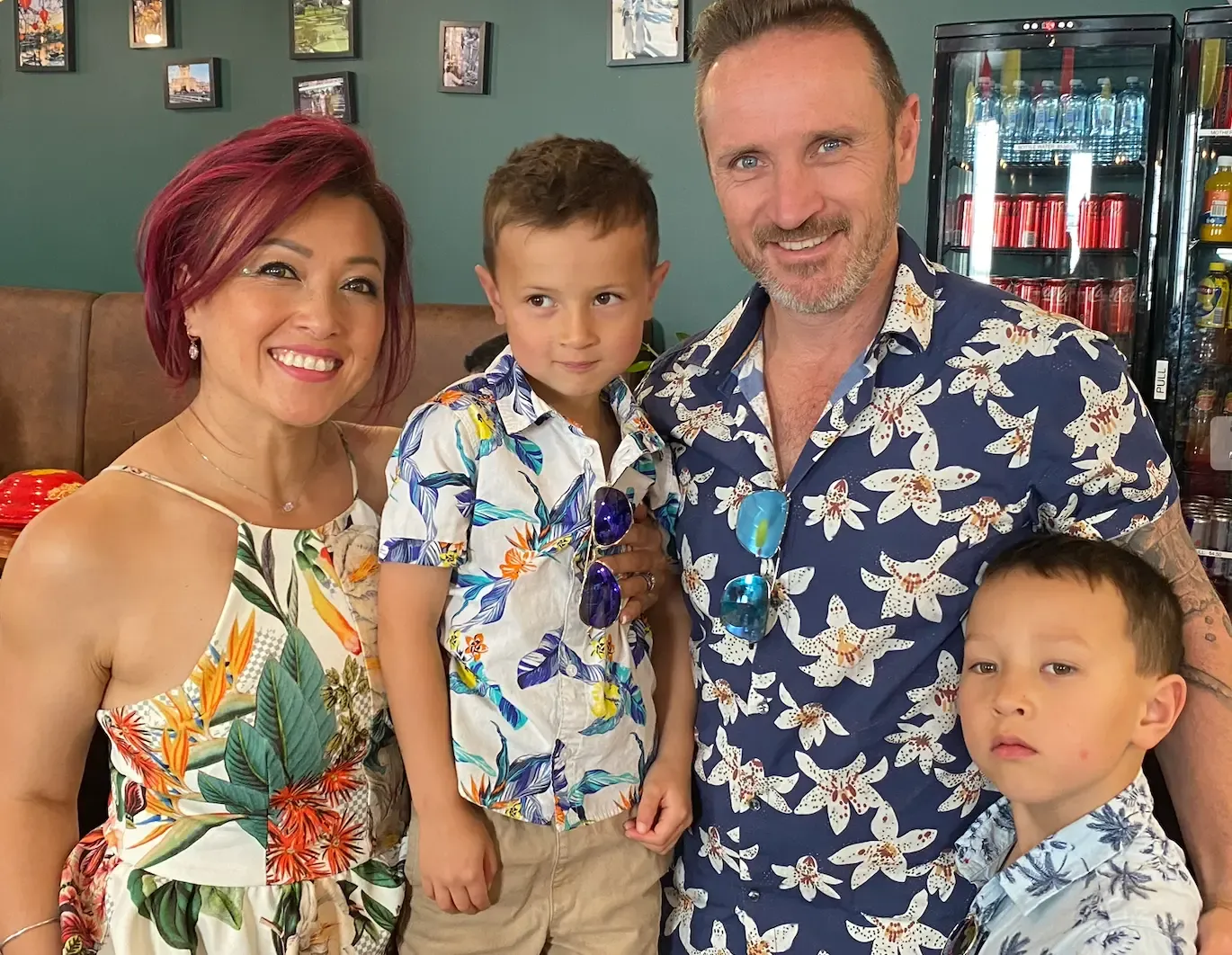
When both sides of our family gather around the same table, I'm reminded of the home I grew up in. Different stories. Different traditions. Different beginnings. Yet the same sense of belonging.
I've come to realise that belonging isn't about where we come from. It's about the love, respect and generosity we choose to build together.
The day Satori found me
In 2013, I was living in London and waiting for my British citizenship. I knew that once I received it, I wanted to start my own business. There was just one problem. I had no name.
So I did what I've often done when I needed clarity. I kept reading.
One day, while reading A New Earth by Eckhart Tolle, something extraordinary happened. On page 177, one word seemed to leap off the page. Satori. I hadn't been looking for it. I hadn't been searching for a Japanese word. Yet the moment I saw it, I knew. That was it.
Satori (悟り) is a Japanese word meaning awakening or understanding. It describes a moment of profound insight, a shift in awareness that changes how we see ourselves and the world.
The name didn't feel chosen. It felt discovered. Satori & Co. was born in London. Over time, it grew, evolved and matured into what is now Satori Connect.
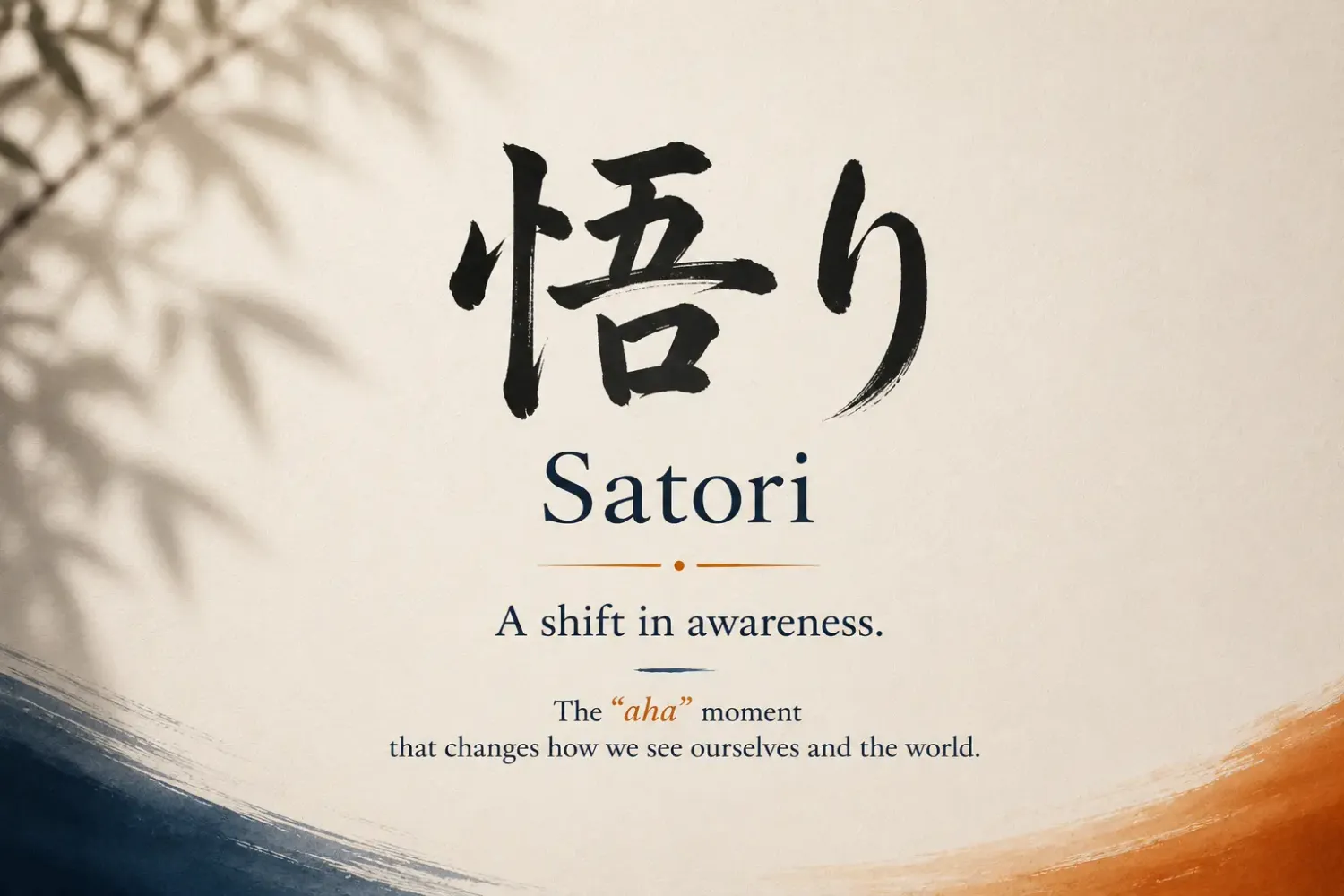
"I didn't choose the name Satori. The name Satori chose me."
What Satori means to me
The Japanese meaning of Satori resonated deeply with me because it captured something I'd seen throughout my life.
Every meaningful change begins with a moment of awareness. An unexpected insight. A new way of seeing ourselves. An "aha" moment. But I've also learned that awareness, on its own, is never enough.
Insight only changes our lives when we choose to act on it. That's why, for me, Satori has come to mean something more.
It is the practice of turning awareness into intentional action. Of helping people see more clearly, apply what they learn, and become more fully who they choose to be.
That belief lives at the heart of everything we create. It is why the Satori Connect mission is to move people beyond awareness into consistent, everyday application. That's the Satori Attitude™ in practice.
An invitation
Everything you'll find in the Satori Learning Library has been created with one hope. That somewhere within these pages you'll experience your own Satori.
A moment that helps you see yourself differently. A moment that encourages you to take one intentional step. A moment that changes not only what you know, but how you choose to live.
When that happens, this work becomes more than a learning library. It becomes another way of honouring the legacy my parents began all those years ago, creating opportunities for others to build lives they genuinely love.
Thank you for being here. I hope this library helps you become more fully who you choose to be.
In gratitude,
Khanh Vu

Khanh Vu
Founder, Satori Connect
Gallup Certified Strengths Coach and founder of Satori Connect, with 24 years of experience in talent development, engagement and leadership coaching. Khanh created the Satori Attitude™ and the Behavioural Intelligence Engine™ that underpin every Satori Connect programme.